Your safety manager finished the quarterly PPE audit. All documentation is complete, respirators are available, hearing protection is stocked, and training records are current. OSHA would find no violations.
Then a worker files a workers’ comp claim for noise-induced hearing loss. The investigation reveals he wore earplugs every single day. He just inserted them incorrectly for three years.
Your PPE program was compliant. It just wasn’t protecting anyone.
This is the hidden gap in workplace safety. Compliance and protection are not the same thing. OSHA requires written programs, medical evaluations, fit testing, and training. Companies implement these requirements, but workers get hurt anyway.
The problem isn’t the regulations. It’s how we implement them.

When Compliance Fails Workers
Most companies approach PPE through a compliance lens. What does OSHA require? What documentation do we need? How do we prove we did it? This creates programs that look good on paper but fail in practice.
Hearing Protection Example
Compliance approach means buying earplugs, posting signs, training workers annually, and filing paperwork.
Protection approach means assessing actual noise levels by task. Providing multiple earplug options since everyone’s ears are different. Training workers on proper insertion with hands-on demonstration. Conducting baseline and annual audiometric testing to catch early hearing loss. Following up individually when testing shows threshold shifts.
Respiratory Protection Example
Compliance approach means writing a respiratory protection program, scheduling fit testing, and conducting annual refresher training.
Protection approach means evaluating the work environment to determine actual respiratory hazards. Conducting medical evaluations to ensure workers can safely wear respirators. Performing qualitative and quantitative fit testing to verify proper seal. Training workers to recognize limitations of their PPE. Inspecting and maintaining equipment properly.
Compliance checks boxes. Protection asks if workers are actually safer.
The Real Cost When PPE Programs Fail
Once hearing is gone, it doesn’t come back. A worker who develops noise-induced hearing loss at 35 lives with that disability forever. They struggle to hear their grandchildren. They can’t enjoy conversations in restaurants. They deal with constant tinnitus.
Respiratory damage from inadequate protection creates similar irreversible harm. Chronic lung conditions reduce capacity and create permanent disability.
Workers’ compensation claims for occupational hearing loss average $75,000 to $500,000, depending on severity. Respiratory illness claims run even higher, especially for chronic conditions.
But the visible claim costs are just the beginning. Each claim increases your experience modification rate, driving up insurance premiums for years. Regulatory scrutiny intensifies. Reputation damage affects your ability to win work.
The painful irony is that you already paid for a PPE program. You just paid for one that didn’t work.
5 Reasons PPE Programs Fail
After reviewing hundreds of workplace safety programs, five failure patterns appear repeatedly.

1. One-Size-Fits-All Approach
Companies buy one type of earplug and expect it to work for everyone. One respirator model for all face shapes. Standard safety glasses for workers with prescription lenses.
People are different. Ear canal sizes vary. Face shapes differ. If PPE doesn’t fit properly, it doesn’t protect properly. A respirator that doesn’t seal allows contaminated air to leak in. Earplugs that don’t fit correctly reduce noise by only 5-10 dB instead of the rated 25-30 dB.

2. Training That Doesn't Change Behavior
Annual training becomes checking a box. Workers sit through a presentation, watch a video, sign an attendance sheet, then continue doing exactly what they were doing before.
Information transfer doesn’t create behavior change. Workers might know proper earplug insertion intellectually while still rolling them incorrectly every single day.

3. No Verification of Effectiveness
You provide hearing protection but don’t conduct baseline or annual audiometric testing. You provide respirators but don’t verify they actually seal properly through fit testing.
You have no idea if your PPE program is working. Workers might be experiencing hearing loss or respiratory exposure, but you won’t know until they file a claim years later.
Audiometric testing catches early hearing loss while you can still intervene. Fit testing reveals seal failures before workers breathe contaminated air.

4. Ignoring Workplace Realities
Your respiratory protection program requires workers to conduct user seal checks before each use. In reality, they’re running between tasks, rushed, and skip the seal check 80% of the time.
You require hearing protection in designated areas. Workers remove earplugs when talking to supervisors, then forget to reinsert them.
Programs designed at a desk don’t account for how work actually happens. Compliance requirements that conflict with productivity get ignored.

5. No Medical Integration
OSHA requires medical evaluations before respirator use. Many companies treat this as paperwork, getting a doctor to sign off and moving on.
Medical evaluations serve a purpose. Some workers can’t safely wear respirators due to cardiac or pulmonary conditions. Others develop conditions over time that make continued respirator use dangerous.
When safety programs and occupational health operate in silos, these medical issues get missed until someone has a serious incident.
Building Programs That Actually Protect Workers
The companies with the most effective PPE programs don’t just comply with OSHA requirements. They build protection into their operations.
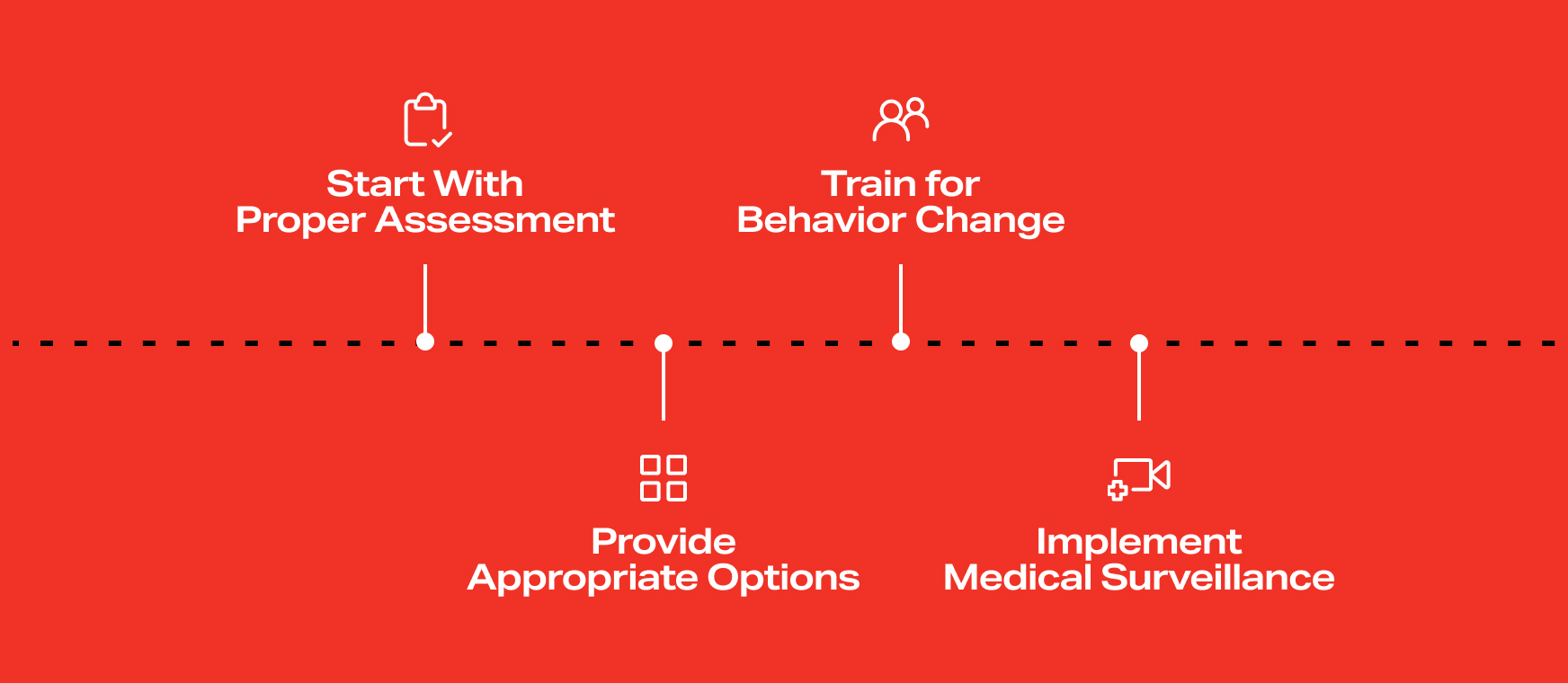
Start With Proper Assessment
Before assigning any PPE, understand the actual hazards. For hearing protection, that means noise monitoring by task and location, not just general area measurements.
An air compressor at 3 feet produces 92 dB with damage in under 2 hours. A power drill hits 98 dB with damage in 30 minutes. Factory environments average 100 dB with damage in 15 minutes. Power saws at 3 feet reach 110 dB with damage in under 2 minutes.
Every 3 dB increase cuts safe exposure time in half. Exposures are cumulative. Running a noisy tool for 30 minutes straight or three 10-minute sessions causes the same hearing damage.
Provide Appropriate Options
Not everyone’s ears are the same size. Not everyone’s face has the same shape. Effective programs provide multiple options.
For hearing protection, offer earplugs in multiple styles and sizes. Some workers prefer foam, others flanged. Provide ear muffs as an alternative or for additional protection in extremely loud environments.
For respiratory protection, stock multiple respirator models to accommodate different face sizes and shapes. Offer different cartridge options based on specific hazards. If workers don’t like their PPE, they’ll find ways to avoid wearing it. Providing options that fit increases compliance dramatically.
Facial hair creates another common fit failure. A worker who’s clean-shaven during initial fit testing might grow a beard months later. Even a few days of stubble compromises the seal on tight-fitting respirators.
OSHA’s respiratory protection standard is clear; nothing can come between the sealing surface of the facepiece and the face. That includes beards, stubble, and even certain hairstyles. Companies need ongoing awareness of these changes. Workers must understand that facial hair affects protection and requires a new fit test. This is why PPE programs need continuous attention, not just a one-time setup.
Train for Behavior Change
Effective training creates lasting behavior change. Don’t just tell workers how to insert earplugs. Demonstrate it. Then have each worker insert their earplugs while you observe and provide immediate correction.
Workers need to understand that once hearing is gone, it doesn’t come back. Show them what permanent hearing loss means for quality of life, not just OSHA compliance.
Train workers to recognize when their respirators aren’t sealing properly, when cartridges need replacement, and when equipment is damaged. Make them active participants in their protection.
Implement Medical Surveillance
Medical surveillance verifies your PPE program is working. Baseline hearing tests establish starting points. Annual testing catches threshold shifts early, when you can still intervene.
For respiratory protection, licensed healthcare professionals determine if workers can safely wear respirators. Both qualitative and quantitative fit testing ensure proper seal. Testing must occur before first use and annually thereafter.
Medical surveillance creates a feedback loop. You’re not just providing PPE and hoping it works. You’re verifying protection and intervening when problems emerge.
What This Looks Like In Practice
OnPoint’s occupational health and industrial hygiene teams help your operations build integrated PPE programs that actually protect workers. Licensed nurses and certified industrial hygienists assess real workplace conditions by evaluating noise levels, identifying respiratory hazards, and determining what PPE is truly needed.
Occupational health nurses perform qualitative and quantitative fit testing to ensure every worker is properly protected. They conduct baseline and annual audiometric testing with standard threshold shift identification. They provide medical evaluations for respirator clearance.
Training isn’t just presentations. Workers get demonstration, practice, and immediate feedback. They learn proper PPE use, care, inspection, and maintenance. They understand limitations and when to request replacement equipment.
The difference is that workers are protected, not just documented.
The Bottom Line
Compliance and protection are not the same thing. You can have a written respiratory protection program and still have workers breathing contaminated air. You can provide hearing protection and still have workers developing noise-induced hearing loss.
Or you can build programs that actually protect people. Programs that provide appropriate PPE options, verify proper fit, train for behavior change, implement medical surveillance, and integrate with how work happens.
The gap between compliance and protection isn’t about spending more money. It’s about implementing programs that work instead of programs that check boxes.
Once hearing is gone, it doesn’t come back. Respiratory damage is permanent. Quality of life matters, on and off the clock. Your workers deserve protection, not paperwork.
About OnPoint
OnPoint delivers comprehensive occupational health and safety services for industrial operations. Our licensed nurses, certified industrial hygienists, and occupational health specialists help companies build PPE programs that protect workers, not just paperwork. From respiratory protection and hearing conservation to medical surveillance and fit testing, we ensure compliance creates actual protection.

