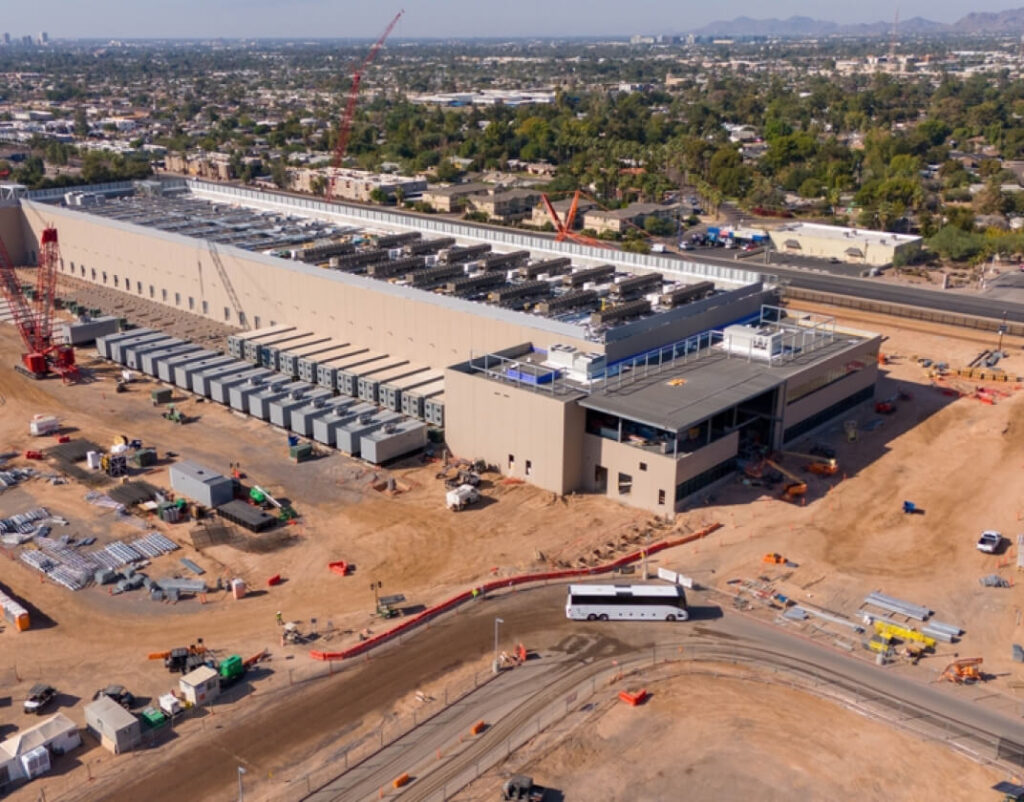
Your 200+ worker data center project is humming along on schedule. Crews are executing flawlessly and safety metrics look good. But there’s a hidden cost bleeding your budget dry, and most project managers never see it coming.
Your workers are spending nearly $1 million annually just walking.
Not being productive, just walking between parking areas, material staging zones, and their actual work locations on massive hyperscale construction sites.
Think of it like paying your electricians to commute. You wouldn’t pay them for their drive from home, but you’re paying them to walk 10 minutes from remote parking to their work zone.

The Hidden Math Behind Lost Productivity
On sprawling AI and cloud data center construction sites, workers can spend 15-30 minutes per day simply navigating the jobsite. Here’s how that translates into real costs:
The Daily Impact Per Worker:
- Time spent walking: 15-30 minutes per day
- Average fully-burdened labor rate: $75/hour
- Daily cost per worker: $18.75 to $37.50
That might not sound like much. But scale it across your entire project:
| Project Size | Daily Walking Cost | Annual Cost (250 days) |
|---|---|---|
| 200 workers | $3,750 to $7,500 | $937,500 to $1,875,000 |
| 500 workers | $9,375 to $18,750 | $2.3M to $4.7M |
| 1,000 workers | $18,750 to $37,500 | $4.7M to $9.4M |
This is money spent on walking instead of productive work. On a 200-worker project, you’re essentially paying for 6 to 12 full-time workers who do nothing but walk all day, every day, for an entire year. That’s like hiring a dozen people and telling them their only job is to pace around the parking lot.
Why This Happens on Hyperscale Data Center Sites
Hyperscale AI and cloud data center construction projects face unique logistics challenges that traditional construction sites don’t:
1. Massive Site Footprints
Modern hyperscale facilities can span millions of square feet. Workers often park in remote lots and walk 5 to 10 minutes just to reach their work areas, before they even start their shift.
Imagine building a facility the size of 10 football fields. Now imagine your parking is at one end zone and your work zone is at the opposite end zone. That’s the daily reality for many data center construction workers.
2. Constantly Changing Site Layouts
As different phases of construction progress, material staging areas, parking zones, and access routes shift. What was a 3-minute walk last week becomes a 15-minute trek this week.
It’s like grocery shopping in a store that rearranges every aisle weekly. You know what you need but finding it takes three times longer than it should.
3. Multiple Contractor Coordination
With dozens of contractors working simultaneously, parking and staging logistics become fragmented. Each trade manages their own transportation, leading to inefficiencies and conflicts.
When everyone’s trying to park closest to their work zone, you end up with a daily game of musical chairs. And unlike the game, everyone loses time.
4. Security and Safety Protocols
Hyperscalers demand rigorous security. This means checkpoints, credential verification, and controlled access routes. All of this adds time to worker movement.
Think airport security for construction workers. Necessary? Absolutely. Time-consuming? You bet.
The Real Cost Nobody Calculates
The financial cost is just the beginning. Transportation inefficiencies create cascading problems:

Worker Fatigue
Workers arrive at their stations already tired from long walks carrying tools and equipment. This increases injury risk and decreases focus during critical tasks.
Ever notice how you’re more prone to mistakes at the end of a long walk? Now imagine starting your workday already fatigued, before you’ve lifted a single tool.
Momentum Loss
Every material run or bathroom break becomes a 20-to-30-minute disruption. Workers lose focus and productivity momentum, making it harder to maintain consistent work quality.
You know that feeling when you’re in a flow state, totally focused, and then someone interrupts you? It takes 15 minutes to get back into that groove. Now multiply that disruption by every trip a worker makes off their work zone.
Schedule Pressure
Lost productive hours compound into schedule delays. What should take 8 hours takes 9 or 10, forcing overtime and compressed timelines.
Crew Coordination Breaks Down
When team members are constantly in transit, coordinating work becomes harder. Handoffs get delayed. Questions go unanswered. Critical details get missed.
It’s like trying to have a team meeting when half your people are stuck in traffic. The work can’t move forward until everyone’s present.
Turn Walking Time into Productivity
The good news? This problem is solvable. Forward-thinking contractors are implementing integrated transportation and logistics strategies that recover this lost productivity:
1. Embedded Logistics Coordination
Rather than leaving transportation to chance, deploy dedicated logistics coordinators who understand your site layout, work sequences, and crew schedules. These specialists proactively optimize:
- Parking assignments based on daily work locations
- Material staging proximity to active work zones
- Shuttle services for distant work areas
- Tool and equipment distribution points
Think of it like having a traffic controller for your jobsite. Instead of everyone driving wherever they want, someone’s actively directing flow to prevent bottlenecks and minimize travel time.
2. Dynamic Site Planning
As construction phases shift, logistics strategies must adapt. Weekly coordination meetings ensure parking, staging, and access routes evolve with the work, preventing yesterday’s efficient route from becoming today’s bottleneck.
It’s like updating your GPS when traffic patterns change. You wouldn’t keep following the same route if construction closed your usual shortcut, right? Same principle applies to jobsite logistics.
3. Technology-Enabled Tracking
Modern site management platforms can map worker movements, identify inefficiencies, and quantify improvements. What gets measured gets managed.
4. Cross-Functional Integration
The most effective solutions integrate transportation with safety, commissioning, and construction schedules. When your logistics coordinator understands MEP sequencing and safety protocols, they can anticipate needs rather than react to problems.
Instead of separate teams working in silos (safety here, logistics there, scheduling somewhere else), you get one coordinated approach. It’s the difference between a relay race where runners hand off the baton smoothly versus everyone running their own separate race and hoping it all works out.
Real-World Results
These aren’t theoretical savings. Companies implementing coordinated logistics strategies on hyperscale projects are seeing measurable results:

25% to 40% reduction
in worker walking time through optimized parking and staging

$750K to $1.5M recovered
annually on 200- worker projects

Improved safety metrics
as workers arrive fresh and focused

Schedule acceleration
from increased productive hours

Higher worker satisfaction
reducing turnover on long-duration projects
Calculate Your Exposure
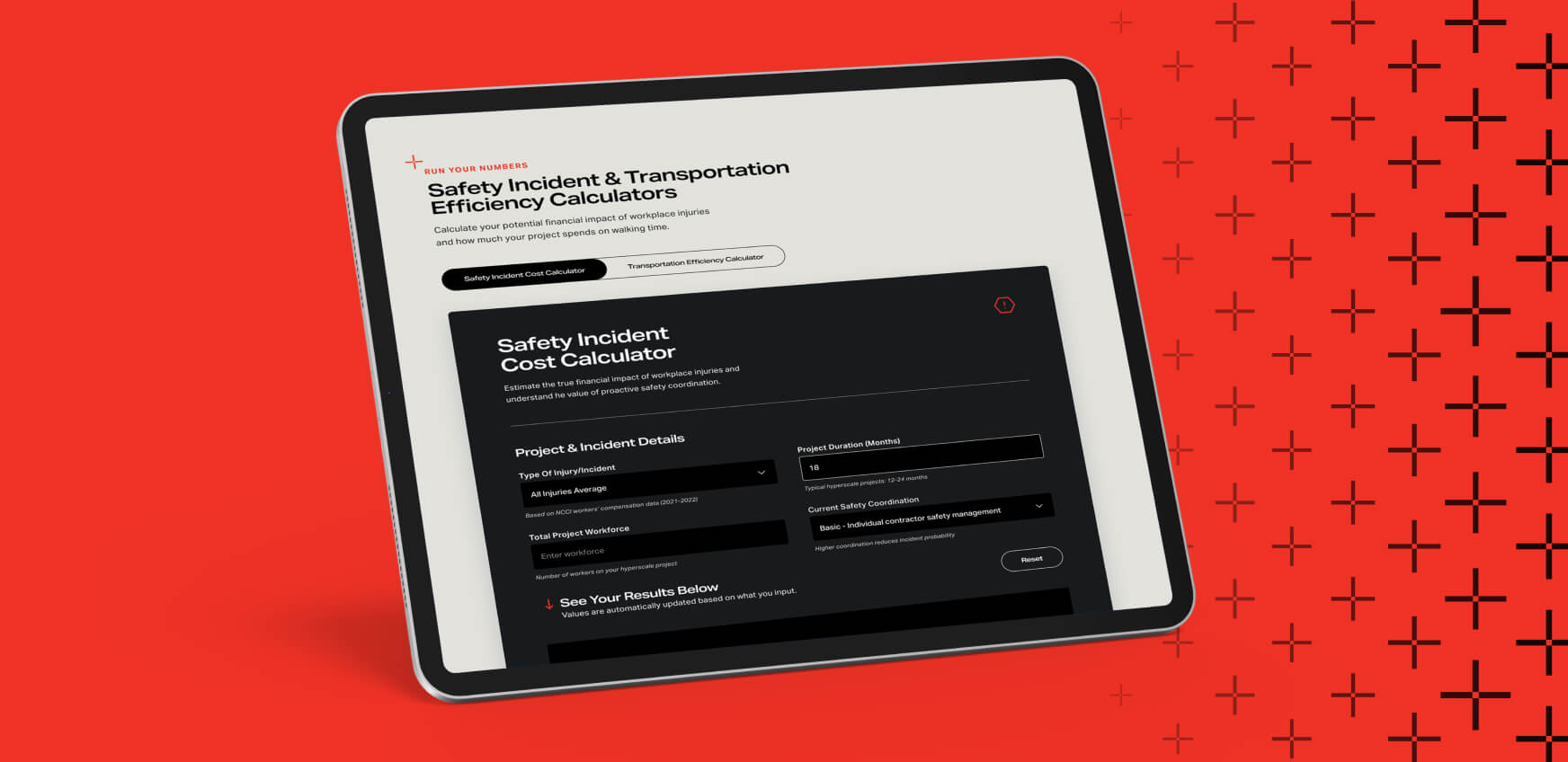
Want to know exactly how much walking time is costing your project? We’ve built a comprehensive toolkit that does the math for you.
Our free Hyperscale Risk Assessment Toolkit includes:
- Transportation Efficiency Calculator that calculates your exact walking time costs based on your project size and site layout
- Incident Cost Calculator with direct and indirect cost multipliers for safety incidents
- Commissioning Readiness Scorecard to identify turnover vulnerabilities before they derail your schedule
These aren’t generic calculators. They’re built specifically for hyperscale data center construction projects and calibrated with industry benchmarks from actual project data.
Walking is Just One Problem
Transportation inefficiency is just one example of how coordination gaps drain hyperscale construction projects. The same pattern appears in:
- Safety handoffs between trades that create compliance gaps
- Materials management where poor sequencing causes delays
- Commissioning integration where late involvement creates final-mile failures
- Schedule coordination where MEP handoffs break down under timeline pressure
Industry data shows that 65% of major hyperscale project delays occur not during primary construction, but in the gaps between trades during these critical handoff points. The contractors winning the most hyperscale work aren’t just the ones with the lowest bids. They’re the ones with the most predictable delivery performance through coordinated execution.
What’s Next for Your Project?
If your data center project is losing $1M annually to walking time, what other coordination gaps are costing you money and schedule?
The first step is assessment. Map your current site logistics:
- Where do workers park versus where do they work?
- How often do staging areas shift?
- Who coordinates transportation between trades?
- How do site logistics integrate with safety and construction schedules?
Once you understand your baseline, you can implement targeted improvements that recover productivity without adding headcount or equipment.
The Bottom Line
Hyperscale AI and cloud data center construction demands precision execution. Every dollar matters. Everyday matters. But most importantly, every minute of productive time matters.
Your workers aren’t walking because they want to. They’re walking because site logistics haven’t been strategically coordinated. That’s a solvable problem, and the return on investment is immediate.
Stop paying $1 million a year for walking time. Start coordinating for results.
About OnPoint
OnPoint delivers comprehensive embedded execution support for hyperscale AI and cloud data center construction. Our cross-trained specialists integrate safety, logistics, transportation, and commissioning coordination to help contractors eliminate costly handoff failures and deliver predictable results on complex projects.

